How Wildfire Smoke Affects Your Health
Associate Professor Jennifer Richmond-Bryant explains how wildfire smoke affects health, why risks vary and what communities can do to prepare.
Key Takeaways
- Wildfire smoke can travel far beyond active fires, creating hazy skies and exposing distant communities to fine particulate matter.
- Fine particulate matter in wildfire smoke can pose health risks, with sensitive groups including children, older adults and people with pre-existing conditions facing greater impacts.
- Reducing wildfire smoke exposure requires monitoring air quality, improving indoor air filtration and preparing communities for increasing wildfire risks.
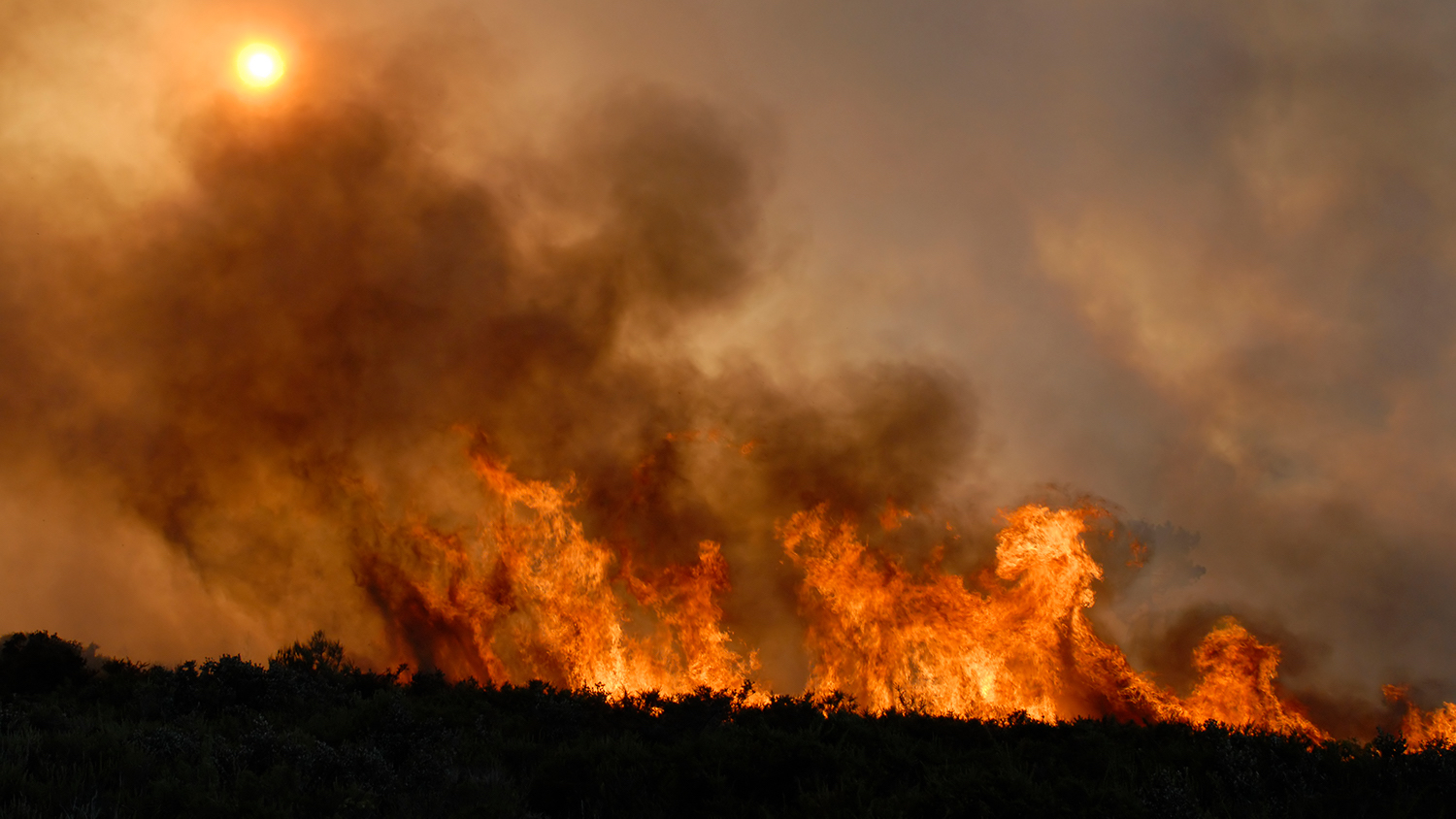
As wildfires become more frequent and severe, a North Carolina State University professor warns that wildfire smoke could pose a growing public health risk as it travels beyond the immediate areas of active fires.
Wildfire smoke contains fine particulate matter — or PM2.5— a mixture of tiny airborne particles that can remain suspended in the air and travel long distances, sometimes thousands of miles.
Fine particulate matter can penetrate deep into the lungs and, in some cases, enter the bloodstream. This can contribute to damage to the heart, lungs and other organs, according to Jennifer Richmond-Bryant, an associate professor of forestry and environmental resources at NC State.
Richmond-Bryant’s research focuses on the assessment of human exposure to air pollution, primarily to understand and address environmental health disparities.
In the following Q&A, Richmond-Bryant discusses how wildfire smoke affects human health, who is most vulnerable, how smoke exposure changes with distance from a fire and what can be done to reduce risks.
How does wildfire smoke affect human health?
Jennifer Richmond-Bryant: Exposure to fine particulate matter in smoke is known to cause cardiovascular disease, according to the Environmental Protection Agency, based on combined evidence from toxicology, epidemiology and controlled human exposure studies. Short-term exposure to fine particulate matter is also known to increase short-term nonaccidental mortality. Fine particulate matter exposure has also been associated with respiratory health effects, neurological health effects and cancer.
Who is most vulnerable to the health effects of wildfire smoke?
Richmond-Bryant: While everyone incurs some risk, sensitive groups, including young children, older adults and people with pre-existing conditions such as asthma, are known to experience disproportionate risk. Many studies have also found that communities of color and low-income communities face a greater risk of experiencing more severe health effects from the same level of environmental exposure. Research shows that these disparities among communities of color are not explained by income alone, suggesting that other factors — such as historical patterns of discrimination, unequal access to health care and higher cumulative environmental burdens — also contribute to poorer health outcomes.
How does distance from a wildfire affect exposure to smoke?
Richmond-Bryant: In general, smoke concentrations decrease with distance from the plume as dispersion dilutes the smoke. Even so, fine particulate matter exposure levels can remain high enough to increase the risk for sensitive groups hundreds or even thousands of miles from a wildfire. Closer to a wildfire, smoke concentrations can become high enough to pose a risk to everyone, regardless of health status.
What are the best ways to reduce exposure to wildfire smoke?
Richmond-Bryant: The EPA developed the Air Quality Index (AQI) to communicate risks of health impacts from air pollution exposure using easy-to-understand color coding. The AQI is publicized on weather apps and the weather section of the news, as well as government-sponsored risk communication platforms such as AirNow.
Code Orange means that the air is unhealthy for sensitive groups (young children, older adults, those with asthma or other pre-existing diseases). Those individuals should stay indoors during such episodes. Code Red means that sensitive individuals may suffer more serious effects, and some who are not sensitive may be impacted. Outdoor exercise should be avoided.
Code Purple and Maroon indicate that the air quality is unhealthy for all groups. People should stay indoors as much as possible with windows and doors closed. The use of portable indoor air filters and high efficiency particulate air filters in home HVAC systems can help to maintain indoor air quality.
What can be done to prevent wildfires and reduce their impact?
Richmond-Bryant: In the short term, remedies such as indoor air filtration and behavior modification can help at an individual level. However, we are now seeing increased frequency and severity of wildfires due to drought conditions produced by climate change. Curtailing fossil fuel consumption is certainly needed, as are fire mitigation strategies such as prescribed burns and minimizing sources of ignition that could ignite dry biomass. It may be too late for these measures to be impactful.
Realistically, we must now focus on adapting to a changing climate. Concurrent with wildfires, we have also seen massive flooding throughout Central Europe and two giant sinkholes form in New York City in recent weeks. Eastern North Carolina has become increasingly vulnerable to flooding, as we have seen in recent years. Relocation from dangerous areas is not desirable because of historical and community connections to the land. Developing land-use strategies to reduce climate change impacts and improve resilience is urgently needed.


