Our Clothes Are Polluting the Environment. Here’s a Solution.
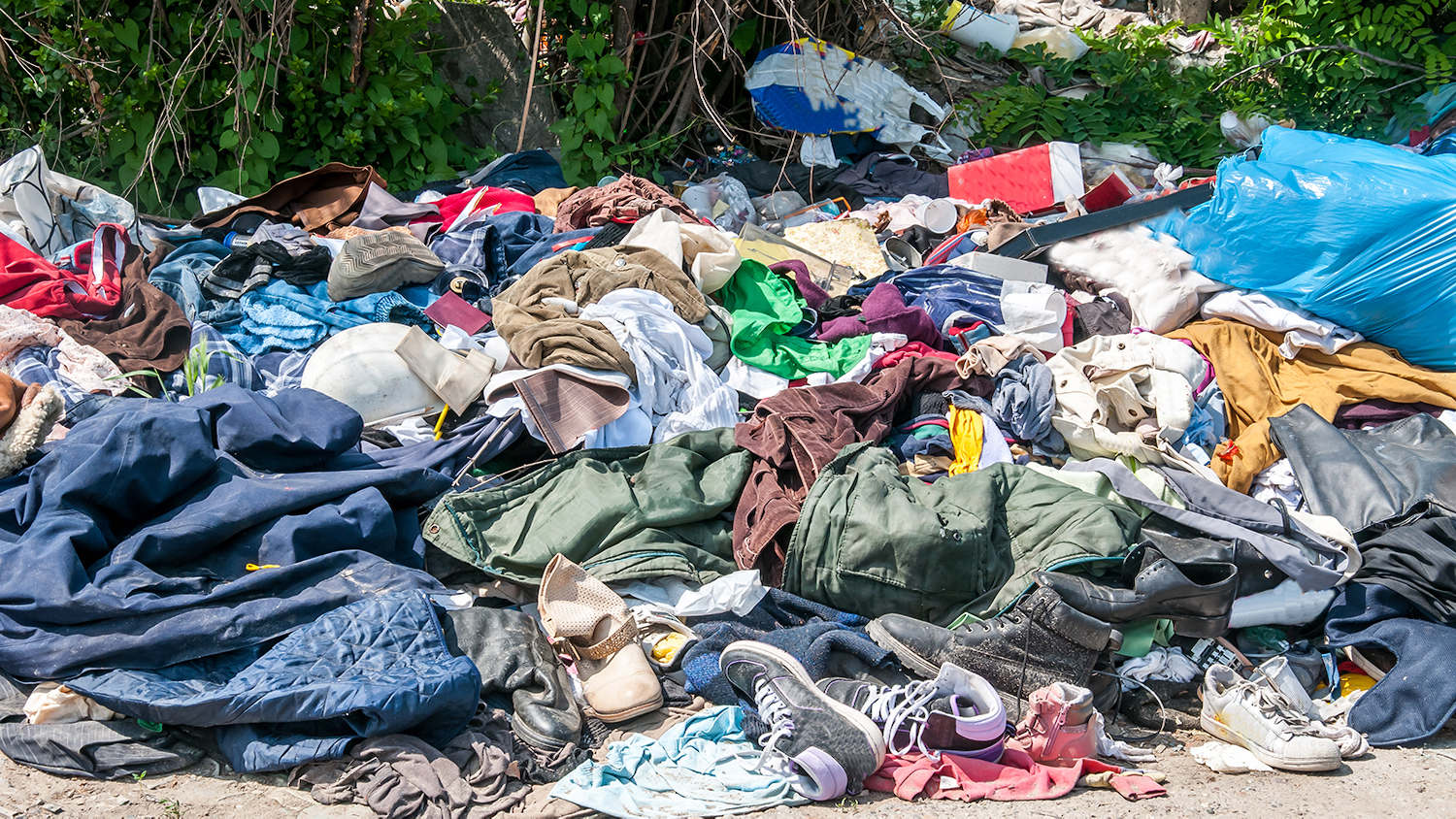
Americans discard roughly 16 million tons of textile waste each year, with about 85% ending up in landfills or incinerators, where they can decompose and release greenhouse gases or leach dyes and other harmful chemicals into the ground and water supplies.
North Carolina State University researchers have partnered with Cotton Incorporated, a nonprofit research and marketing organization funded by cotton growers and importers in the United States, to address this issue.
The project aims to determine whether post-consumer cotton textiles, including clothing, fashion accessories, towels, bedding and drapery, can be transformed into sustainable building blocks for new and usable products.
“Compared to other fibers, cotton textile fiber is inherently unique from a chemical and biological perspective, because it is essentially pure and natural cellulose,” said Ronalds Gonzalez, an assistant professor in the Department of Forest Biomaterials at NC State and one of the project’s lead researchers.
Gonzalez added that as a result of this composition, cotton clothes can be broken down almost completely into simple sugars like glucose. This means old clothing can be recycled as raw material to create new, valuable products
While this idea and area of research is not new, there are limited studies specific to post-consumer and textile-based feedstocks. Additionally, most academic work in this area utilizes exotic processes and components, making industrial feasibility highly questionable.
For the last few years, research at Cotton Incorporated, led by Matt Farrell and Mary Ankeny in the Textile Chemistry Research Department, has focused on developing a chemical and enzyme-based cotton-to-sugar concept that could be easily adapted in the commercial realm.
Cotton Incorporated recruited the assistance of Gonzalez and his colleagues, Hasan Jameel and Ronald Marquez, to investigate the technical and economic feasibility of this approach. As part of the collaboration, the researchers also developed a highly efficient and simple process to degrade cotton fabric.
“In research, we are constantly introduced to the next best idea. Typically, these ideas are accompanied by unrealized technical or economic challenges that mitigate the practicality of the idea,” Farrell said. “The ideas and developments of the NC State team not only showcase practicality but highlight the power of collaboration, the power of a sustainable chemistry mindset and the power of cotton as a ubiquitous material to be used and reused in nearly all facets of everyday life.”
Gonzalez said the process is chemical-free, energy-efficient and economically feasible. The technology is transitioning from bench-scale to a planned pilot demonstration, ultimately paving the way for new markets and reduced greenhouse gas emissions.
“This research is at the heart of the circular economy enabling the transformation of waste materials for further utilization,” Gonzalez said.
- Categories: