Mini-Pitches Create Healthier Communities by Offering Safe, Accessible Recreation Spaces

A study conducted by North Carolina State University researchers shows that mini-pitches significantly improve access to safe, localized and affordable recreational opportunities in underserved neighborhoods nationwide.
Mini-pitches are customized, hard-court surfaces that resemble small soccer fields. They are designed to host organized soccer programs and casual pick-up games, though they can also be used for other recreational activities.
Aaron Hipp and Kyle Bunds, professors of parks, recreation and tourism management, led a one-year study of the U.S. Soccer Foundation’s Safe Places to Play program, evaluating mini-pitch locations, participant engagement and more.
Established in 2015, the Safe Places to Play program aims to install 1,000 mini-pitches nationwide by the end of 2026, following the Men’s World Cup co-hosted by the United States, with a focus on increasing physical activity and community engagement among youth and families living in underserved communities.
Research shows that children in underserved communities are significantly less likely to have access to recreational facilities compared to those in more affluent communities, resulting in fewer opportunities for physical activity.
“Mini-pitches increase access to safe recreational spaces, fostering healthy lifestyles for children and adults,” Hipp said. “They also serve as valuable community hubs, enhancing feelings of safety and providing a gathering place for families while also boosting local sports participation and creating a sense of togetherness.”
Analyzing Mini-Pitch Access and Engagement
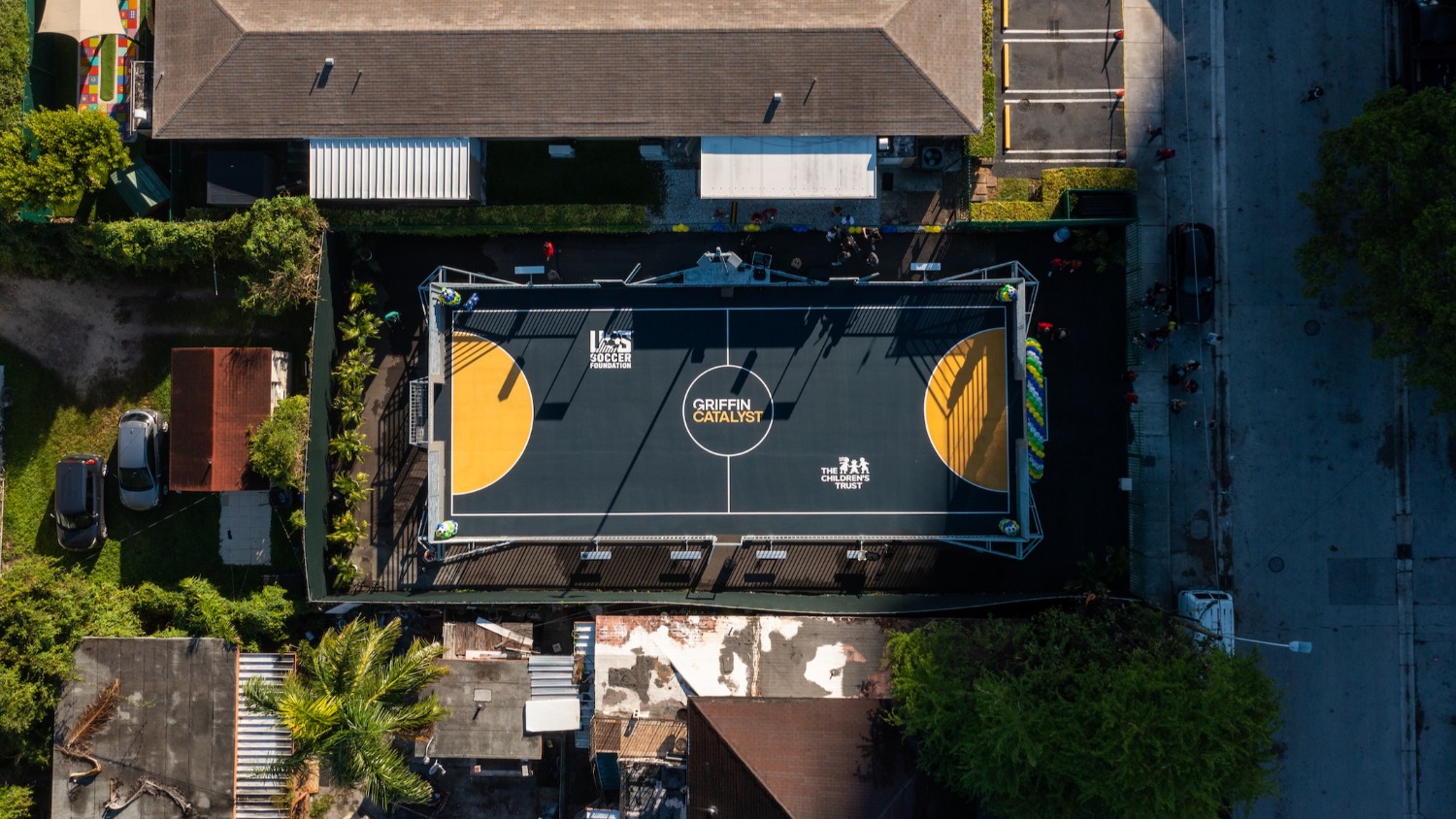
Hipp and Bunds, with Tania Allen from the College of Design and four graduate students, conducted a geospatial analysis of current U.S. Soccer Foundation mini-pitch locations, creating a nationwide interactive map consisting of all mini-pitch locations overlaid with the childhood opportunity index and childhood population density.
The analysis found that approximately 70% of the more than 800 mini-pitches installed by the Safe Places to Play program to date are located in areas previously ranking low in the quality of resources and conditions for children’s healthy development.
It also revealed that 6.5 million children, including thousands in under-resourced communities, now live within a half mile of a mini-pitch, with each mini-pitch reaching an average of 10,000 children.
“The U.S. Soccer Foundation has the stated goal of increasing safe places to play. Our data shows they are doing a fantastic job with this,” Hipp said.
The NC State team also surveyed Safe Places to Play partners and programmers (schools, parks and recreation departments, etc.) and conducted systematic observations of existing mini-pitches to gain insights into users and user behaviors.
“The use we observed often matched the neighborhood where the mini-pitch was located.”
The survey results and systematic observations revealed that 78% of mini-pitch users are children ages 5 to 18. “These mini-pitches are primarily in neighborhood parks, and it is kids and families who can walk to these spaces that are using them,” Hipp said.
Systematic observations also revealed that 93% of mini-pitch users are male and that most are Hispanic/Latino or Caucasian.
“The use we observed often matched the neighborhood where the mini-pitch was located,” Hipp said. “This was especially the case on mini-pitches located in neighborhoods that are primarily Hispanic/Latino.”
In communities with large Hispanic/Latino populations, mini-pitches are highly utilized during both scheduled programming and open play, reflecting soccer’s deep cultural significance within these communities.
Conversely, in non-Hispanic/Latino communities, mini-pitches are underutilized during open play, signaling an increased need for building awareness of the mini-pitches through short and longer-term programming.
Programming Boosts Mini-Pitch Use and Participation
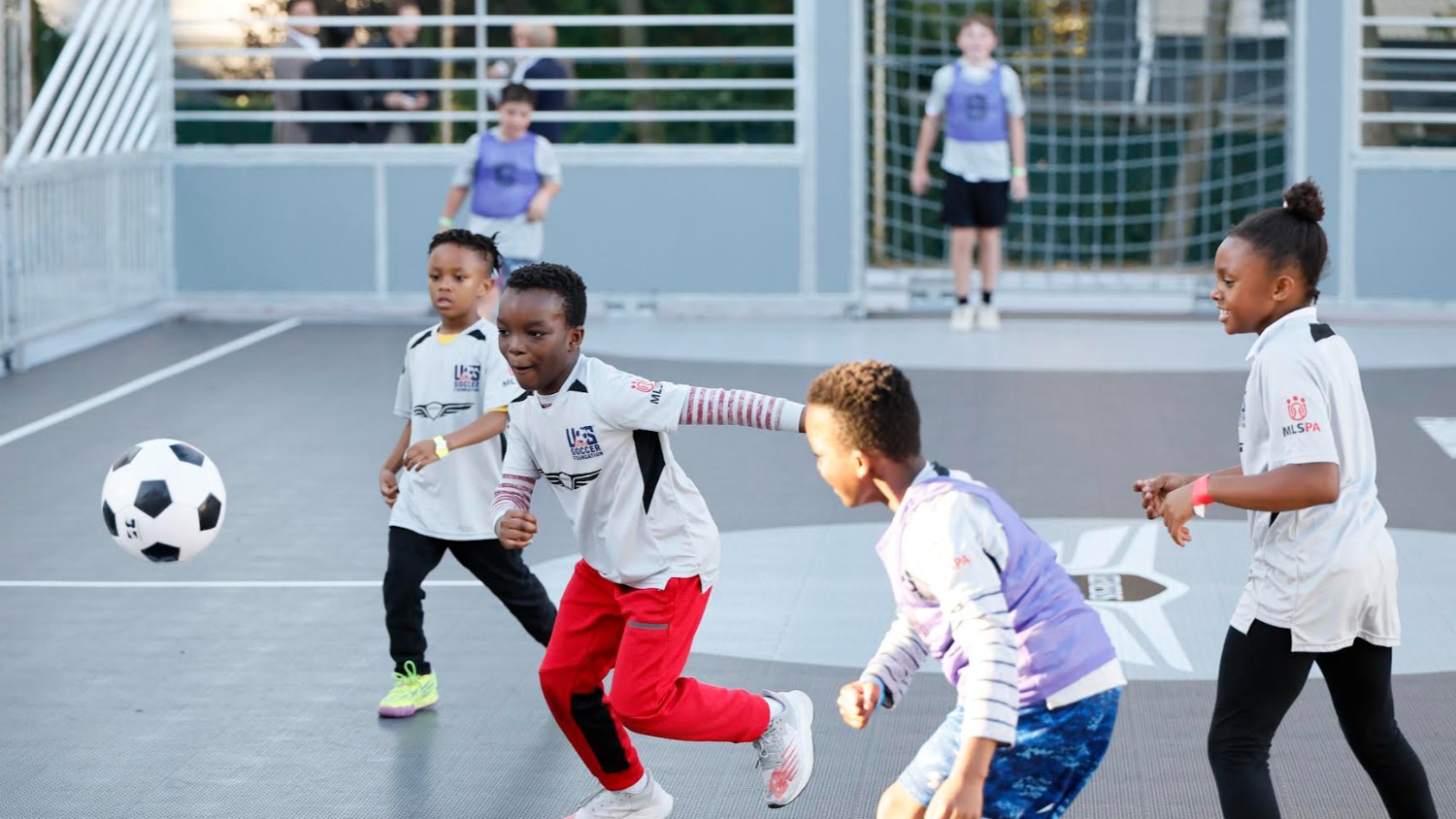
Programming can maximize the use of mini-pitches by allowing users to engage in a range of activities and with more and different groups. It can also be used to attract underrepresented demographics, such as girls or older adults.
The NC State team found that approximately 82% of mini-pitch programmers offer soccer programming, while almost a third offer non-soccer programming. More than 80% of mini-pitch programming is offered free or at a reduced rate.
Looking forward, 29% of the programmers surveyed stated they are actively looking to expand programming in the future, with 14% specifically interested in increasing programming aimed at engaging a wider audience.
The NC State team concluded that “specific efforts are required to provide a safe and welcoming environment for girls and women to play,” citing that just 7% of mini-pitch users are female.
They also recommended that programmers try to work with local sites and landowners to try to locate mini-pitches near multiple amenities (playgrounds, grills, etc.) and in public spots that are easily visible and accessible to better serve communities.
Mini-pitches used most regularly and fully attract people who are participating in other nearby activities, such as picnicking or grilling, playing at the playground, playing basketball or another sport, or riding bikes.
“It was evident that surrounding assets played a significant role in the utilization of mini-pitches,” the NC State team concluded in the study.