Emy Tran: Navigating Eco-Emotions in a Rapidly Changing World
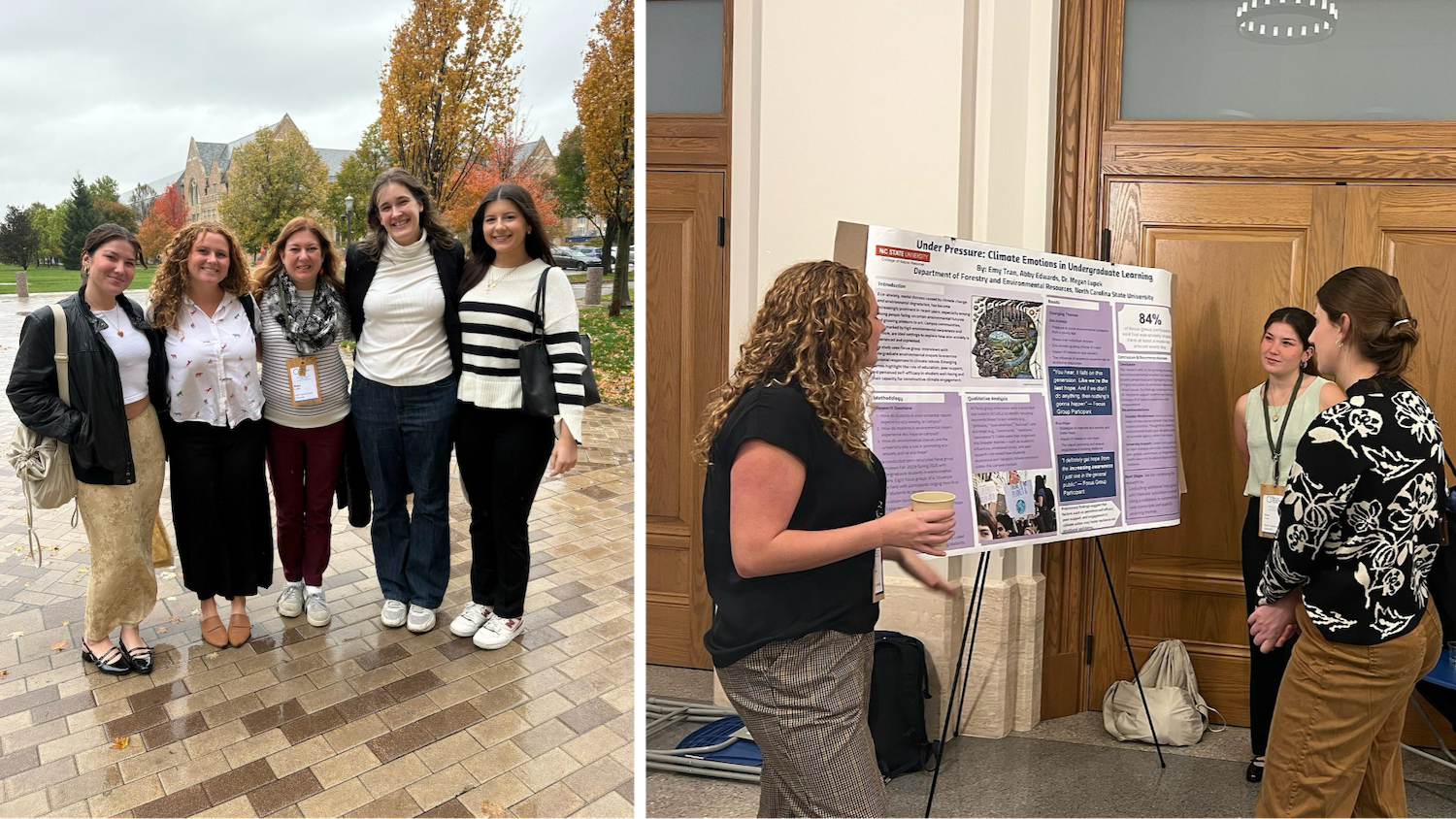
Coming into college four years ago, I never would have expected that studying natural resources would mean learning just as much about emotions as it does about ecosystems. However, all this time later, it’s become clearer and clearer: environmental issues aren’t just changing landscapes, they’re changing us. For my external learning experience, I am continuing an undergraduate research experience within the College of Natural Resources. This research seeks to assess feelings of eco-anxiety and eco-hope within undergraduate students pursuing degrees within the fields of natural resources and environmental studies. Discussions regarding feelings of eco-anxiety and eco-hope are relatively new in the field of environmental social science. However, they have become more and more present within recent studies as large-scale environmental catastrophes, such as deforestation and climate change, have only continued to worsen. Before we can really understand what this study is assessing, we have to understand what eco-anxiety is. Eco-anxiety is defined as the mental distress, often culminating in a sense of chronic fear, caused by any environmental crisis or long-term anxiety rooted in environmental action. These feelings differ significantly from traditional anxiety, both in cause and in how they resonate in students’ day-to-day lives. Feelings of eco-anxiety have emerged as a particularly prevalent issue among teenage and young adult audiences, as these groups face uncertainty regarding their futures due to environmental catastrophe. Due to this, when designing this study, we decided that campus communities would be the ideal setting to investigate the prevalence and manifestations of these feelings. As these university environments are often characterized by a high level of environmental awareness and activism, we wanted to speak to students, faculty, and staff about their experiences not only with eco-anxiety but also feelings of eco-hope.
To assess these feelings, we decided to conduct multiple focus groups across many semesters of undergraduate students enrolled in the College of Natural Resources. This external learning experience is particularly special to me because, as I mentioned previously, I am continuing this research from past semesters. I have actually had this position as an undergraduate research assistant since the spring semester of my sophomore year, so I have been working on this project for about two years. Since I have been working on this for such a significant chunk of my college career, I’ve been able to observe the way students’ perspectives have shifted across semesters. This study uses focus group interviews with undergraduate environmental majors to examine emotional responses to climate issues, including both eco-anxiety and eco-hope. More specifically, we conducted multiple semi-structured focus group interviews each semester beginning in Fall of 2023, and we will, sadly, be conducting our final focus group interviews this semester, Fall of 2025. These focus groups were conducted with the intention of evaluating students’ feelings of eco-anxiety and eco-hope in both their day-to-day lives, and their academic pursuits. To do this, we constructed three key research questions: 1) How do students in environmental majors experience eco-anxiety on campus? 2) How do students in environmental majors experience eco-hope on campus?, and 3) How do environmental classes and the university play a role in promoting eco-anxiety and/or eco-hope? We used these three questions as a framework to construct our script of questions for the focus groups; and I feel that they were ultimately successful, as some of the common topics that we saw discussed were students’ experiences with eco-anxiety and eco-hope, different triggers and coping strategies that students utilize, as well as the university’s role in shaping these different emotional responses that we often see in CNR students. In total, I have had the privilege of speaking to dozens of undergraduate students in environmentally related majors, with these participants representing a variety of our College’s majors, and ages ranging from first-year students to seniors.
This research experience, specifically, is one that I find extremely special due to its foundation in the social sciences. From my experience speaking with fellow undergrads, becoming involved with scientific research can often sound or seem very intimidating to students because of its associations with highly specialized or technical scientific knowledge and skill. I feel very lucky because my research offers a much less traditional trajectory, as it relies just as heavily on the collection of qualitative data as it does on the quantitative analysis of said data. The qualitative data, or the discussions that take place during the aforementioned focus groups, are both audio and video-recorded. I then transcribe these recordings into a script-like document, allowing my co-undergraduate research assistant and me to perform a quantitative analysis of our qualitative data. We perform this quantitative analysis by thematically analyzing the transcripts to identify frequent tropes and/or patterns mentioned across participant narratives. Each of the transcripts from these focus group interviews was uploaded into ATLAS.ti, a software used to analyze and manage large amounts of qualitative data, for coding and theme development. Using this software, we flag recurring keywords and phrases related to eco-anxiety and eco-hope, and assign them to a numeric value. Some of these common ideas have included “pressure,” “overwhelmed,” and “burnout,” for the former, and “community,” “solutions,” and “awareness,” related to the latter. These codes are then grouped into broader themes reflecting participants’ experiences, such as “academic influences,” “emotional stress,” and “peer support.” By going through each and every one of these steps, we have been able to identify overall patterns across students within the College of Natural Resources, and ultimately better understand how students navigate climate emotions on campus.
As our ultimate study has yet to be concluded, and therefore yet to be published, I can not include many of our overall findings. However, I can share a brief summary of some of our results. Largely, we determined that patterns of eco-anxiety involve feelings of pressure to solve environmental problems from a young age, stress over their individual choices, eco-anxieties guiding their choice of either major(s) or minor(s), and the impact of their classes on their feelings of eco-anxiety. On the other hand, discussions of eco-hope often resonated in mentions of common coping strategies to deal with eco-anxiety, the impacts of classes on their feelings of eco-hope, and the role that community and shared experiences play in building resilience to feelings of eco-anxiety. Our preliminary findings suggest that factors such as perceived self-efficacy, peer support, and engagement in climate action may play a role in fostering feelings of resilience and emotional well-being in environmental-centered spaces. These findings have also shown that a large majority of student feel that eco-anxiety impacts them at least a moderate amount within their everyday lives, truly highlighting the significance of this project. Our research contributes to the growing conversation surrounding environmental emotions, but enhances it by centering the conversation on student perspectives and using this to highlight the impact of higher education on emotional responses to climate issues. Our findings underscore the need for the implementation of intentional support systems and teaching strategies that balance awareness of these pressing environmental issues with methods of encouragement and empowerment.
Using our preliminary findings from our completed research so far, I have had the privilege of presenting this project, and our recommendations for its future, at numerous conferences and symposia. By examining eco-anxiety and its prevalence among students in the College of Natural Resources, I have gained valuable insights into its mental health implications, and how it manifests in students’ day-to-day lives. Furthermore, we can use this to identify effective intervention strategies to support students who are experiencing this form of distress. Primarily, we recommend educator mindfulness. Instructors should be aware of how the content presented in their courses may influence students’ emotions. By thoughtfully presenting the environmental challenges that are synonymous with this field, alongside solutions to promote agency rather than despair, professors and university staff can play their part in minimizing feelings of eco-anxiety among students. Additionally, we call upon the university for support. We urge the university to create more opportunities for open dialogue about eco-anxiety through peer groups, workshops, and integrated mental health initiatives, helping to reduce stigma and foster resilience across the campus community. In the coming semesters, we hope to continue to see this research, and research of its kind, be prevalent throughout campuses. In addition to the actionable change that we hope to achieve with our findings, we also hope to see this research project continued. Both I and my research partner will be graduating at the end of this upcoming spring semester, so we will not be abe to continue with this project, however, we hope that someone will be able to build upon these findings by conducting additional focus groups until thematic saturation has been reached, and expanding upon this research to impact not just the College of Natural Resources, but the NC State Community as a whole.