Grand North American Migrations
This page/content is part of the College of Natural Resources Web Archive. It is kept only for reference, research, or record-keeping and is no longer maintained. It may not meet current accessibility standards. To request content in an accessible format, contact us via email.
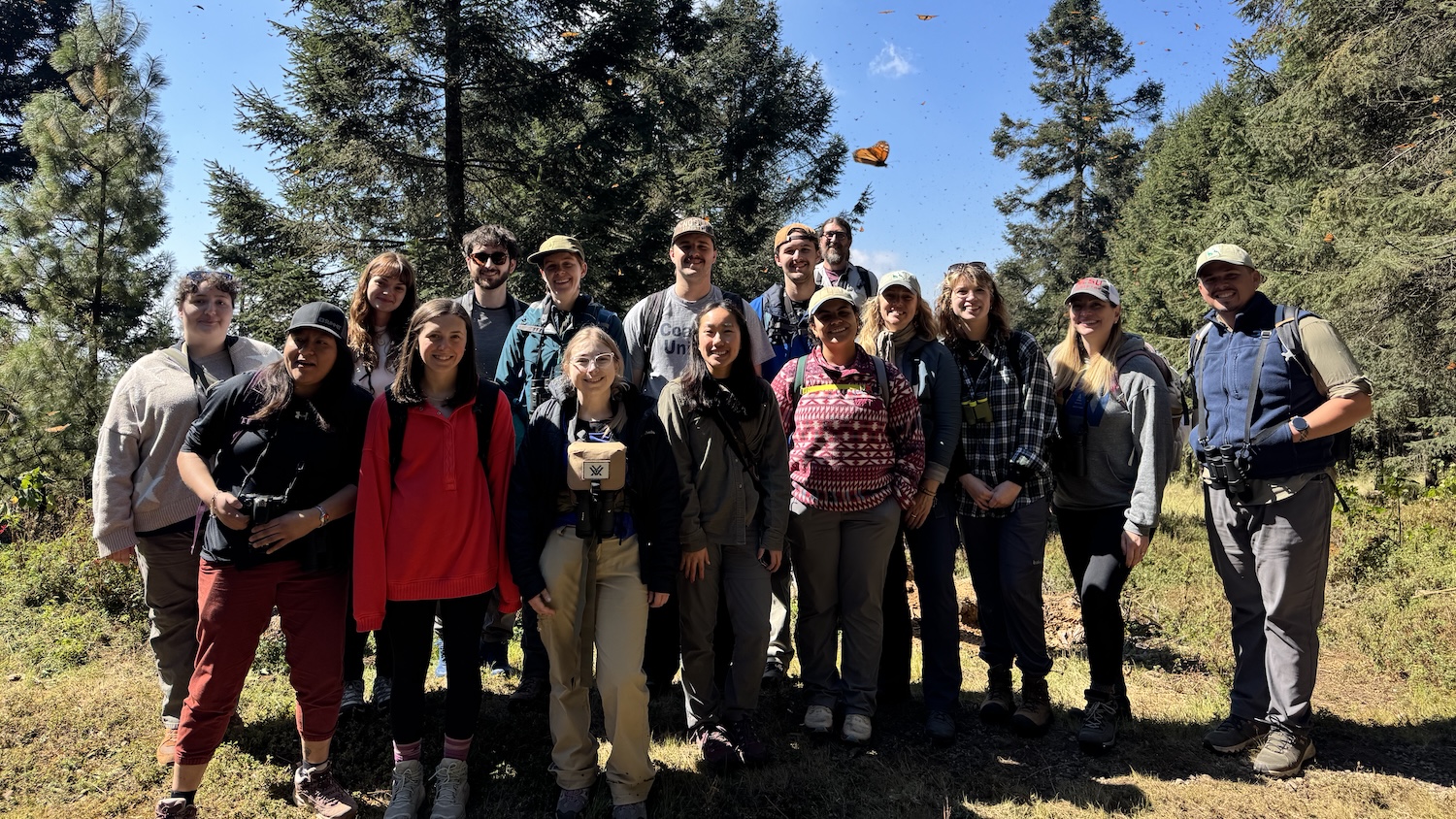
Drs. Kelly Oten (FER) and Steve Frank (DEPP) led 12 students on a Study Abroad program to Mexico from January 3–10, 2026. The group spent three days in central Mexico visiting high-elevation oyamel fir forests, where millions of overwintering monarch butterflies roost—an unforgettable experience that connected migration, conservation, and one of nature’s most remarkable phenomena. Before leaving the cooler highlands, students also explored a nearby lagoon and lake to observe local wildlife. The group then traveled to Puerto Vallarta, where students learned about the ecology, migration, and conservation of humpback whales, including how protected breeding grounds and responsible ecotourism contribute to population recovery.

The experience was capped by an incredible close encounter while whale watching, as a humpback calf breached near the boat and later swam beneath it alongside its mother. The trip also included a visit to a military macaw conservation preserve, where students learned about ongoing efforts to protect habitat, reduce illegal trade, and support recovery of these loud, colorful, and endangered birds.
