
Undergraduate Research Program
The I-GROUP Internship is a year-long, paid, cohort-based research experience for NC State undergraduates with an interest in geospatial analytics.
Interdisciplinary Geospatial Research Opportunities Undergraduate Program
(I-GROUP)
Curious about how maps, data, and spatial tools can help solve real-world challenges?
Join the I-GROUP (Interdisciplinary Geospatial Research Opportunities Undergraduate Program) Internship at NC State’s Center for Geospatial Analytics.
I-GROUP offers paid, hands-on research experiences for undergraduate students from any major who want to explore geospatial questions through an interdisciplinary lens.
Applications for 2026-2027 are now closed.
Why Apply?
As an I-GROUP intern, you’ll:
- Work alongside leading faculty and researchers in labs across the Center
- Be supported by a tiered mentoring model, including faculty, researchers and graduate students
- Join a cohort of students passionate about solving real-world challenges
- Get hands-on experience in academic research and working with real-world data
- Build professional skills (including help applying for graduate school) through monthly workshops
- Present a poster at the Undergraduate Research & Creativity Symposium
Program Details
- Full academic year (two semesters) – students graduating in December are not eligible to participate
- $15 per hour plus $1,000 stipend ($500/semester)
- 8-10 hours per week
- GIS experience is preferred
Who Should Apply?
This program is open to NC State undergraduates from any discipline who are curious, motivated, and interested in geospatial research. Whether you’re studying environmental science, sociology, statistics, computer science, design, engineering, or any other field, I-GROUP is your opportunity to do meaningful, interdisciplinary work that makes an impact.
I-GROUP is a Packways Recognized High Impact Experience (HIE). Learn more about research opportunities available to undergraduates through the Office of Undergraduate Research.
2026-27 I-GROUP Interns

Lilly Alvir
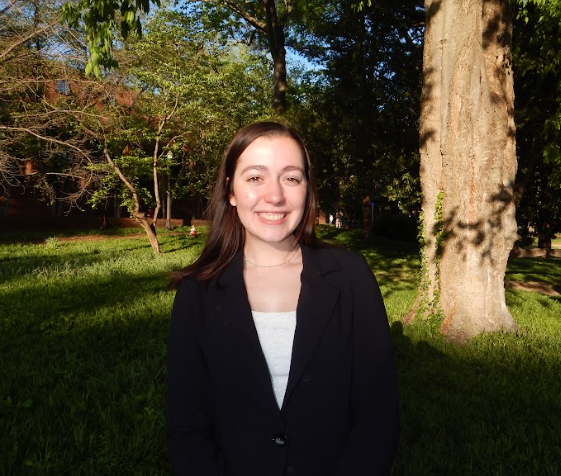
Ruby Blue

Praneel Magapu

Meredith Morris

Anuva Nuzhat

Emily Piotrowski

Michael Puerto

Promit Saha

Ellie Tracy

Christina Wallace
Why participate in an undergraduate research experience?
- Build self-confidence and independence
- Improve your written, oral and interpersonal communication
- Develop critical thinking and problem solving skills
- Explore different career paths
- Gain practical, real-world experience
- Learn to work with a diverse team
- Become part of a scholarly community
- Prepare for success in the workplace and/or graduate school
Lopatto, D. (2007); Petrella, J.K. and Jung, A.P. (2008)
What our interns have to say…
“I aspire to work in the public health field, and this was my first true exposure to real-world work in this area. Through this program, I believe my confidence, public speaking, awareness, and resilience have all improved. I know I can continue to grow in these areas, but presenting weekly, preparing for and speaking at a conference, and conveying data to peers and mentors who do not share the same background all helped me develop these skills. Furthermore, I learned how to work closely with someone from a different discipline and how to embrace ideas I would not have come up with on my own.”
“Working as an I-GROUP intern was a great experience, in the technical skills that I learned, the professionalism and research practices, and the exploration of a new field: geospatial analytics.”
“I felt both welcomed and supported by the I-GROUP cohort. Being the youngest or most inexperienced member of a research lab can be intimidating, so it was reassuring to meet a group of people who were all in similar positions. As an undergraduate student, I sometimes worried that I didn’t have enough knowledge, skills, or experience to meaningfully contribute to the lab. However, all members of the lab were there to support me. My mentor offered guidance and was always willing to answer my questions. The PhD students were particularly helpful with technical advice or looking at issues I ran into. Additionally, they offered career advice and tried to get to know me and my interests. I appreciated being a part of such a warm and welcoming group and felt that they truly wanted me to succeed.”
“I learned a lot about what it’s like to work on an interdisciplinary team. I’ve always enjoyed collaborating with people from different backgrounds, but this experience was more integrated than anything I’ve done before. My research group combined Geospatial Analytics, Data Science, and Economics within an Environmental Engineering context. Because of that, I was able to apply my own background while also learning how other fields approach problems.”
“Through I-GROUP, I gained valuable experience working with both technical research professionals and community leaders, which helped me grow significantly in my communication skills and confidence…My mentor created an environment where learning was encouraged and questions were never seen as a weakness. She was very helpful in guiding me through new tasks while also giving me enough independence to grow and develop my own abilities. That balance of support and trust made a major difference in how comfortable I felt contributing to the team. Instead of feeling intimidated by what I did not know, I began to focus on what I was capable of learning.”